
Step into Modern Midcentury Style
...and into the Danish home I grew up in, where clean lines, honest materials, and natural light made everyday life feel quietly beautiful. Come find inspiration to decorate your own home in this style.
I'm a child of the 1960s, raised in a home built in the 1950s in Højbjerg, Denmark (a suburb outside Århus), a quiet neighborhood where the good taste of Danish modernism shaped everyday life. I grew up surrounded by quality wood furniture such as the spoke-back sofa by Børge Mogensen, ours in a deep green woven fabric, and a Le Corbusier cowhide chaise. My parents loved good design: practical, beautiful, and made to last. Those early impressions became part of me. Scandinavian design is my starting point in life. It's in my DNA.

Design Le Corbusier, Pierre Jeanneret, Charlotte Perriand, 1928
Sling seat, Chrome steel frame, black enamel steel base
Made in Italy by Cassina. Courtesey by the Hive.com
This is not midcentury Scandinavian design at all of course, but it fits the concept!
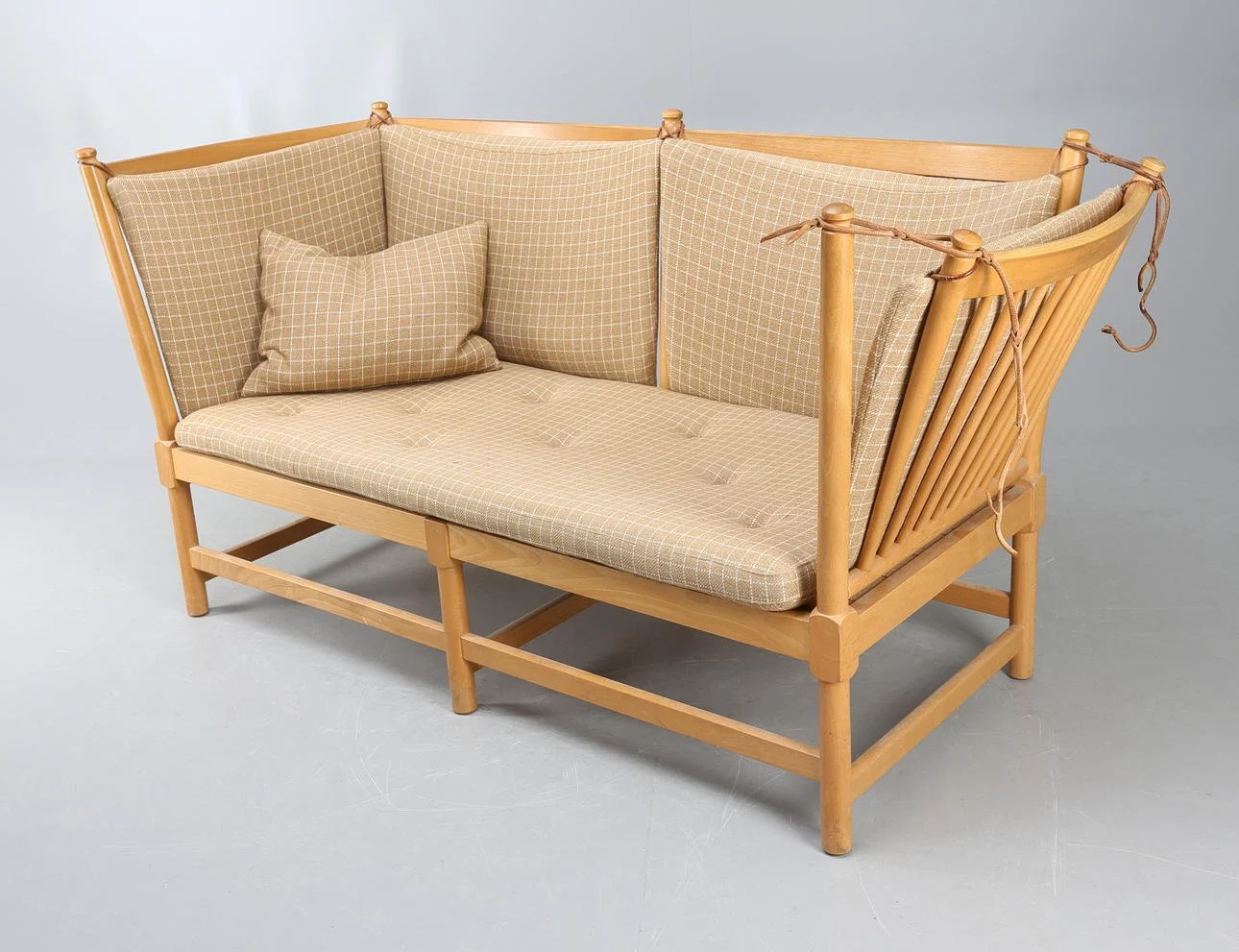
Spoke-back sofa /Tremmesofa, Børge Mogensen, Fritz Hansen, Denmark. Model 1789 was designed in1945 and the start of production was 1953. Made in beech wood with loose cushions. Courtesy by InteriorShop.dk
I’ve read many good books on our tremmesofa like this because it works both as sofa and daybed with a foldable short side.
A House Built Into a Gravel Pit
Our house went up in the early 1950s on the site of a former gravel pit, so the back of it, and all its levels, dropped down into the ground. There were two split levels on top and two in the basement. It was a big house, and the garden around it was even bigger, largely unkempt, with tall trees, especially in the back.
My brother, our friends from the street, and I spent hours out there playing hide and seek and building forts. In an unused greenhouse I made a playhouse of my own. Inside, I would snuggle up on the tremmesofa with a book. A huge window looked out over the garden: birch trees with their white and black patterns, majestic oaks, and all the birds coming to visit. There was so much green.
The Red Kitchen
The room I remember most is the kitchen. The cabinets were matte red and true midcentury, with half circles cut into the fronts to open the doors and drawers. Over the windows hung two Marimekko roller blinds with a town in red, orange, and pink. They were my favorite window coverings, so lively against all that matte red.
Almost every day after school my mother, my brother, and I sat in that kitchen and had afternoon tea, sometimes with scones. We aren't British, but coffee or tea in the afternoon was simply what people did back then.
Simplicity Meets Warmth
I've always been drawn to the clean lines, honest materials, and natural light that define midcentury interiors. What I love most is the feeling: the "hygge" that warms the space and the soul. It never feels cold the way strict minimalism can. It's simple, yes, but deeply human.
At its heart, Danish midcentury design celebrates clarity and function. There's an easy rhythm between geometry and comfort, structure and softness. Think tapered legs, curved edges, warm wood tones, and large windows where form meets feeling. It's about designing for life, not display.
I still love this period, and we have several authentic midcentury pieces in our home. One I simply cherish is my grandmother's sewing table in teak and wicker. Pair a piece like that with the right lamp, casting a cozy yet practical light, or with candlelight, then add something soft or textured, like a wallpaper, and you have hygge.

Farmor’s (grandmar’s) teak sewing table with a wicker basket, from around 1960
A Brighter Palette in Florida
I have always liked brighter colors, but my palette got dialed up after moving here. The light is different, much more intense, and the flowers and fruits sing in bold yellow, orange, pink, and violet blues. The climate is subtropical, so everything is green all year. It's a long way from the birch trees of Højbjerg, and yet the two keep meeting in my work.
My Interpretation
As a textile designer, I've created my own interpretation of midcentury modern, a way to connect my Scandinavian roots with a modern sensibility and my life in Florida. The mood board below reflects that blend: classic midcentury forms paired with my own wallpaper, upholstery fabric, and pillows featuring an abstract geometric pattern. I'm fascinated by how these shapes can echo nature (the rhythm of leaves, waves, or shadows) while keeping a strong graphic identity.
How Abstract Geometry Forms Began
The pattern started with organic collage shapes I had lying around. I liked them when I put them together in a square, but they felt too flat. They needed something more, so I added texture. The texture is part nature, the birch trees of my childhood garden, and part graffiti city energy.
I originally called the pattern Cato's Jazz Form. That was the first time when our semi-feral cat, Cato, took posession of my desk while as was arranging the shapes on the computer. I also listen to jazz all the time, and that rhythm added to the pop edge and the graffiti feel. The name changed, but the mood stayed.
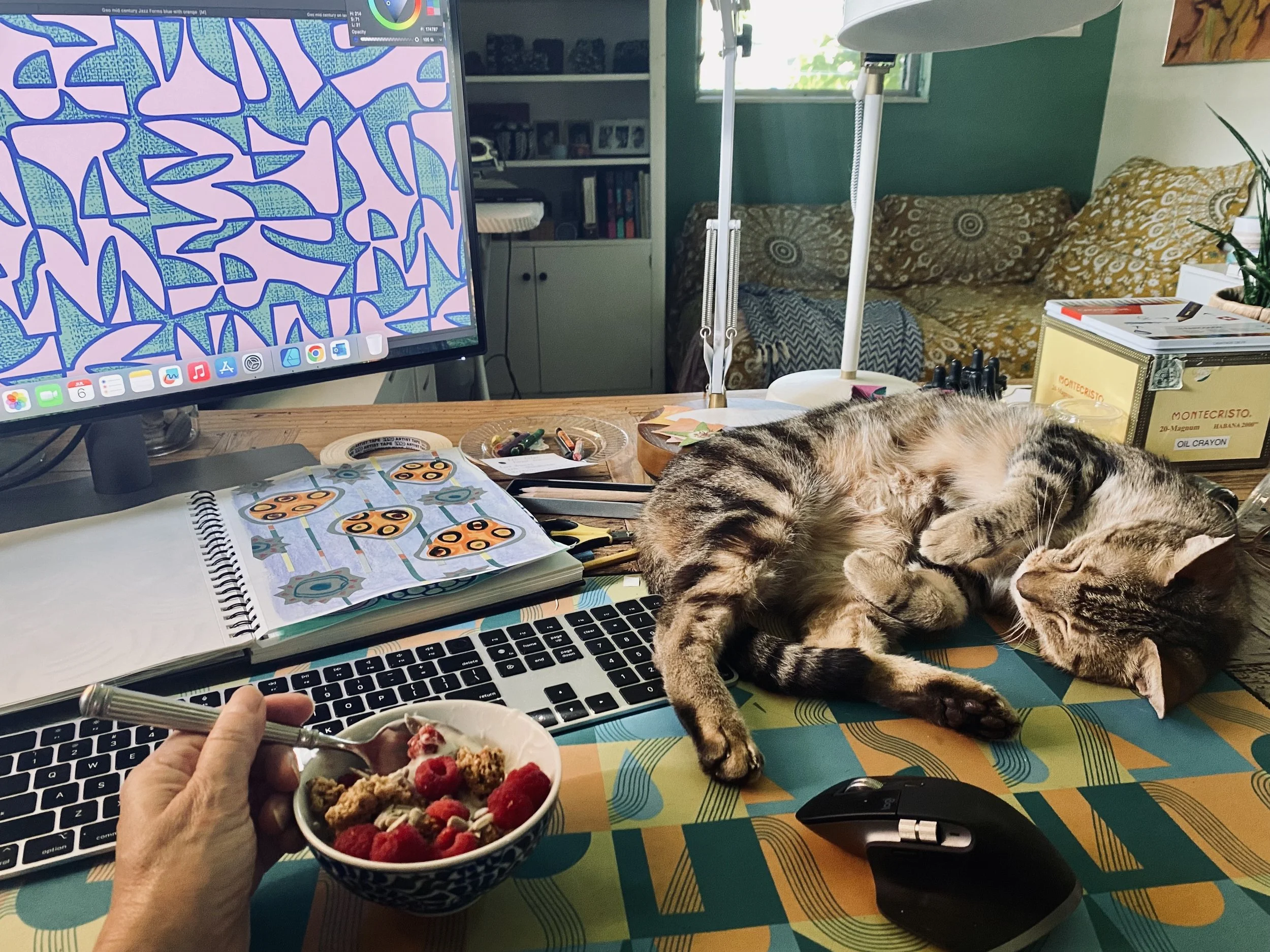
Cato and Jazz Forms on the computer
Two Moods, One Pattern
I wanted the same shapes to do different jobs, so I made two moods.
For the upholstery and pillows I made several colorways, bold and edgy. They amplify the geometric motifs with a graphic, graffiti-inspired pop edge, bringing energy, rhythm, and playful sophistication to modern interiors.
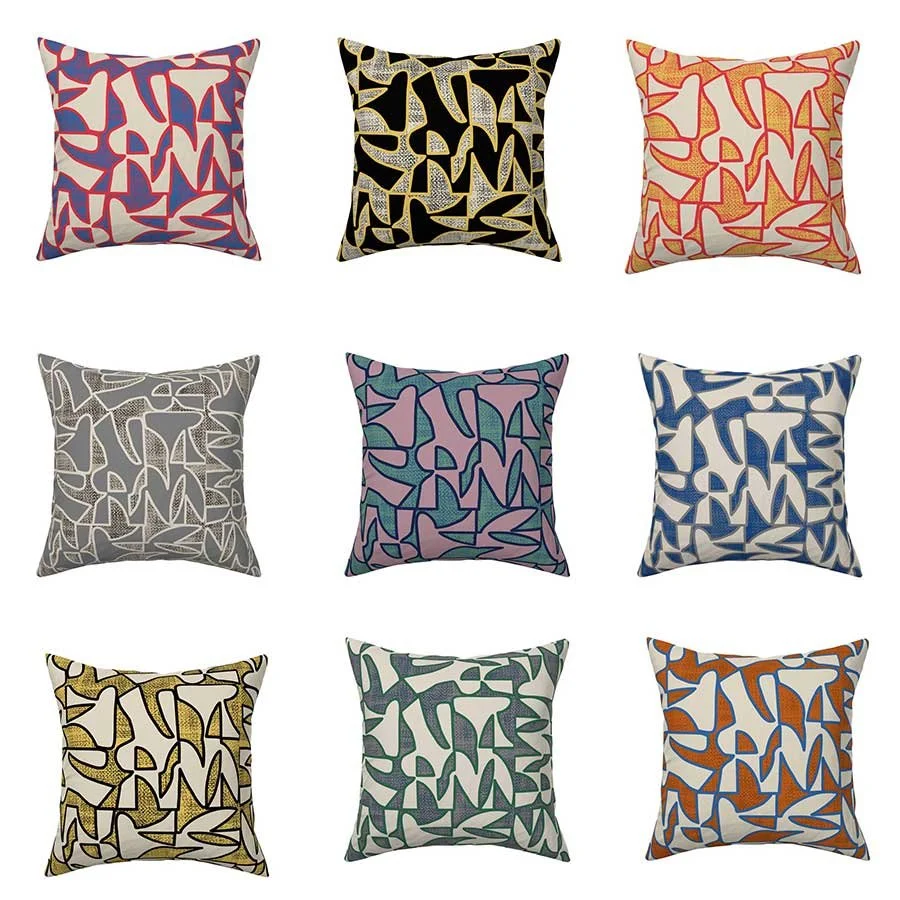
Pillows with the bolder Abstracted Forms, see more here
For the wallpaper I wanted to soften the feel and make it more biophilic, like the large window in my childhood garden: an almost blurred look of nature and texture. That became three softer, textured versions in muted blue, green, and brown. Organic shapes layer over woven, stone-like grounds, and the result is a natural textured wallpaper that brings calm and serenity indoors.
Together, they form a dialogue between calm and character, texture and line: a cohesive yet versatile collection that bridges nature's quiet beauty (Quiet Geometry) with midcentury pop home decor (Abstract Geometry).
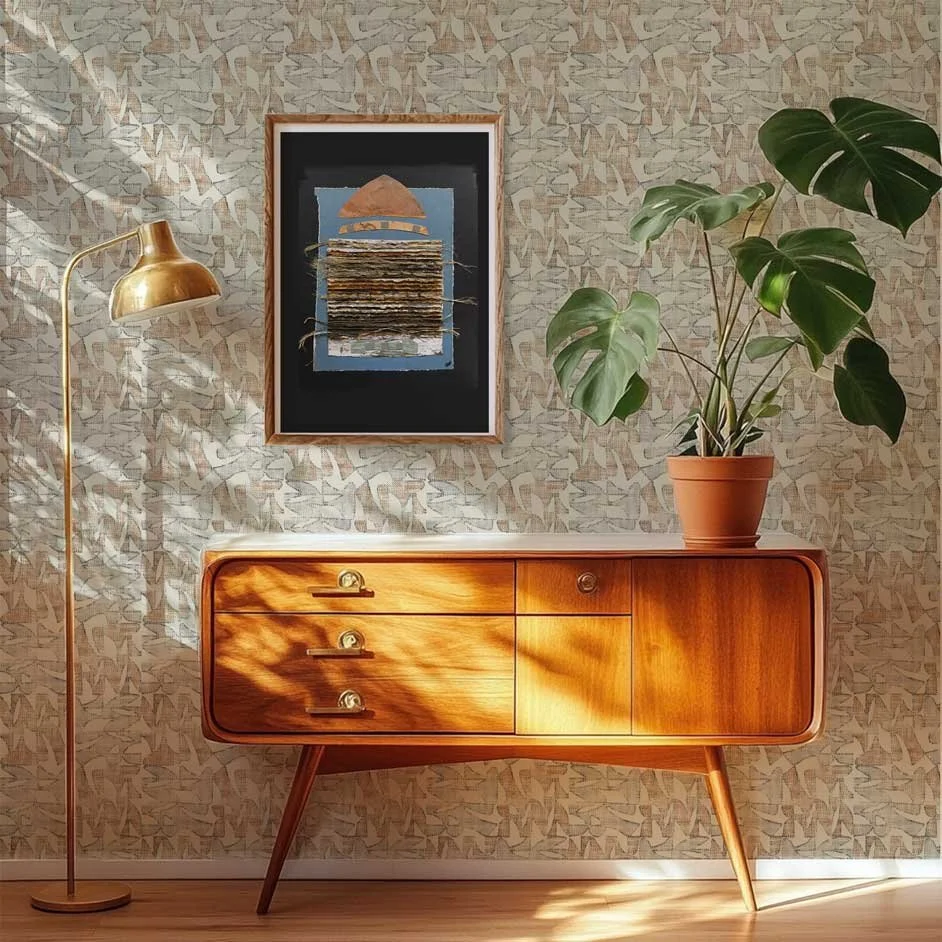
Midcentury credenza with Quiet Geometry Forms wallpaper in Beige and Brown, see all 3 colorways here
Also depicted is my mixed media collage “Built -up”from The Earth Series in the Abstract Gallery
Who I Design For
I picture someone who is nature-oriented and wants to bring the outdoors in, but who also likes a bit of geometry and edge. Someone who loves midcentury interior design and wants to add the hygge of wallpaper to it.
I'm conceptual and aware of trends like midcentury and biophilic. Yet I shape them into my own expression, which is not super trend-forward focused. For interior design, that means midcentury patterns with a point of view, rooted in Danish design and made by hand.

The Abstract Geometry collection can be found in my Spoonflower shop here
The mood board isn't just a glimpse into my creative process. It's meant to inspire you to decorate in the Danish midcentury spirit. I hope it sparks ideas for how you can bring that balance of simplicity, warmth, and nature into your own home. Mix wood and woven textures, add soft geometry through surface pattern design, and play with color in a calm but joyful way. Scandinavian midcentury style isn't about perfection. It's about creating spaces that feel honest, comfortable, and alive with personal expression.
Why It Endures
Midcentury design continues to inspire because it captures something essential: harmony between people, materials, and light. It's timeless, adaptable, and always welcoming. For me, it's not just a style; it's a way of seeing beauty in balance and purpose. It's the mood I grew up with, and the one I still strive to recreate in every design I make.
See the full collection in my Spoonflower shop: Abstract Geometry by CKF Design Studio
Warmly,
Charlotte